Thai Cooking Guides
LOBO Pad Thai Sauce 6-Pack: Noodle Timing and Stir-Fry Setup Guide
Plan Pad Thai with a LOBO sauce 6-pack: prepare rice noodles, stage ingredients, manage pan load, follow label directions, and refine texture batch by batch.
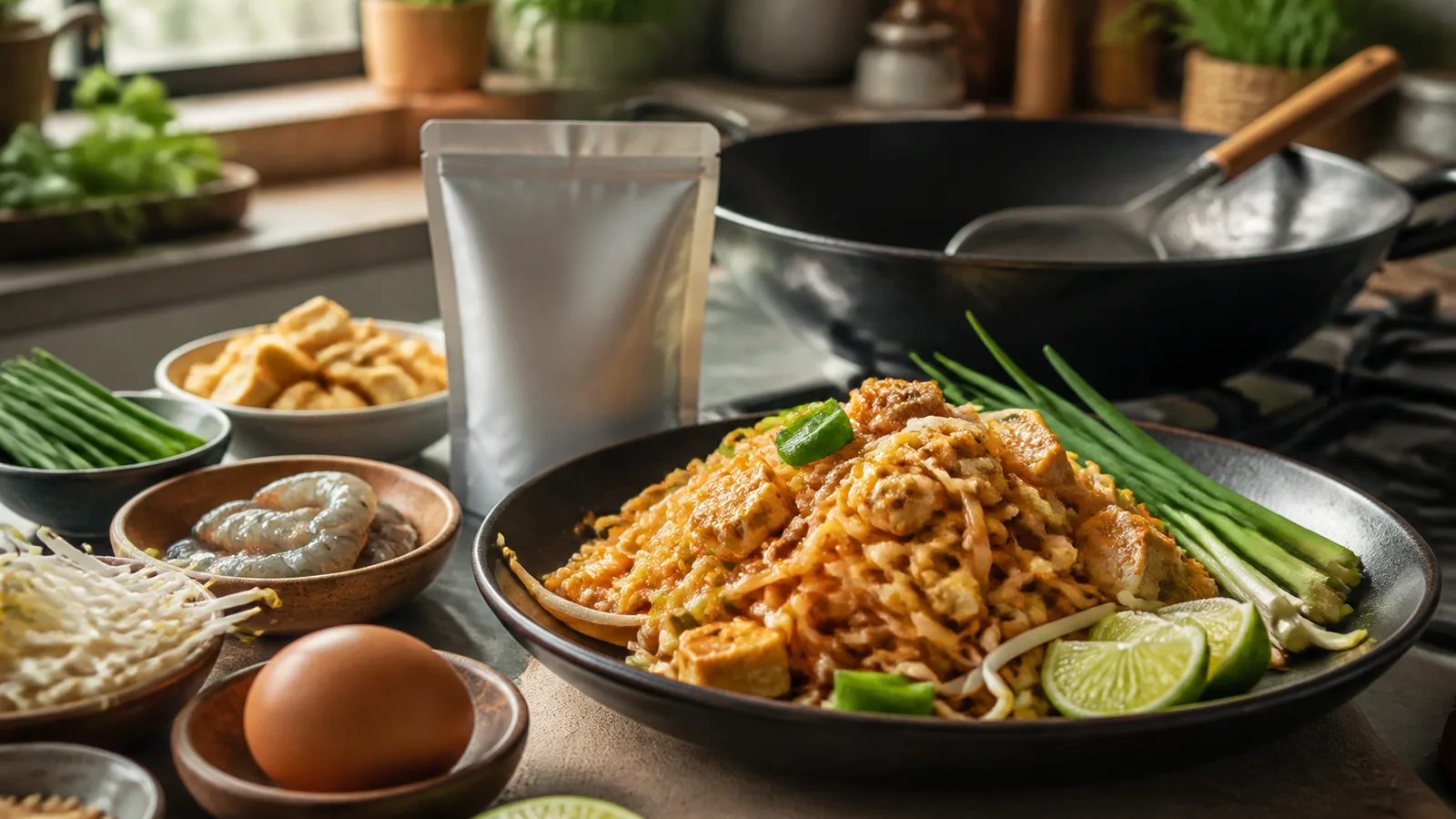
Good Pad Thai preparation is less about rushing and more about having every component ready before the pan gets hot. Rice noodles can move from firm to soft quickly, while vegetables, protein, sauce, and garnishes each need different handling. A packaged sauce can simplify the flavor base, but the cook still controls noodle hydration, pan load, heat, and final texture. The LOBO Pad Thai Stir-Fry Sauce 120g 6-Pack offers six pouches for several cooking sessions. The product description says each 120g pouch is designed for two servings and includes Pad Thai paste with crushed roasted peanuts. Use that as a planning reference, then follow the physical package label for the current ingredients, allergen information, preparation directions, storage instructions, and serving guidance. Read the pouch before planning dinner Packaging is the controlling source for how a food product should be handled. Check the ingredient list and allergen statement before selecting add-ins or serving anyone with dietary restrictions. Because the sauce is described as including crushed roasted peanuts, do not assume it is suitable for a peanut-free meal. Also check whether other allergens are declared on the actual pouch and consider the labels of noodles, oils, proteins, garnishes, and condiments used alongside it. Review the best-before information and confirm that the pouch is sealed and undamaged. Follow the label's storage directions both before and after opening. If a pouch is swollen, leaking, unusually damaged, or otherwise questionable, do not use it. Once opened, follow the package guidance rather than assuming that leftover sauce can remain at room temperature or be kept for a particular number of days. Choose noodles by instructions, not guesswork Rice noodles vary in width and thickness, so one soaking time cannot cover every brand. Start with the noodle package directions. The goal before stir-frying is usually a flexible noodle that still has enough firmness to finish cooking in the pan. If noodles become fully soft during soaking, they may turn fragile when combined with sauce and other ingredients. Test a strand rather than relying only on the clock. It should bend without breaking but retain some resistance. Drain thoroughly so excess water does not dilute the sauce or cool the pan. If the noodles must wait briefly, keep them from drying into a solid block according to the noodle maker's guidance. Avoid soaking a large quantity far in advance until you know how that specific product behaves. Set up the cooking station Stir-frying moves quickly, so place prepared ingredients within reach. A practical sequence is cooking oil, chosen protein, firm vegetables, drained noodles, sauce, quick-cooking vegetables, and garnishes. Exact ingredients are flexible, but their preparation and safe handling matter. Cut pieces to a consistent size, keep raw ingredients separate from ready-to-eat items, and use clean utensils and surfaces. If using meat, seafood, eggs, tofu, or another protein, follow appropriate food-safety practices and cook it to the safe doneness guidance applicable to that ingredient. Do not depend on the color of the sauce to judge doneness. A clean plate should be ready for cooked food; never return it to a plate that held raw protein unless the plate has been washed. Prepare optional finishing items such as lime wedges, bean sprouts, herbs, or additional crushed peanuts only after checking dietary needs and labels. Serving garnishes separately can let diners adjust acidity, crunch, and freshness. It also avoids mixing an optional allergen into the entire pan, although kitchens managing allergies must consider cross-contact throughout preparation. Cook a manageable batch A crowded pan traps steam and reduces direct contact with the hot surface. For a new noodle, pan, or stove combination, begin with the serving quantity stated on one sauce pouch rather than combining several pouches at once. This makes it easier to learn the timing and to correct the texture before scaling up. Heat the pan as appropriate for its material and the oil being used. Cook components in a logical order, allowing dense or raw items the time they require. Add the prepared noodles and sauce according to the physical package directions. Toss or turn them so the sauce is distributed without repeatedly crushing the noodles. If the pan is difficult to move, two utensils can help lift and separate strands. Watch texture as the noodles absorb moisture. If they remain too firm, consult the package method and make small adjustments rather than pouring in a large amount of liquid. Too much liquid can turn a stir-fry into a simmer and soften the noodles unevenly. If the pan appears wet, adding more heat is not always the answer; pan crowding, noodle drainage, and ingredient moisture may be the underlying causes. Use a simple first-batch checklist Read the sauce pouch and every key ingredient label, including allergen and storage information. Measure a batch around the pouch's stated serving guidance. Prepare noodles according to their own package and drain them well. Cut and stage all ingredients before heating the pan. Keep raw proteins and their utensils separate from cooked food. Add ingredients in an order that reflects their cooking time. Follow the sauce pouch's preparation directions and assess noodle texture before serving. Write down what worked: noodle brand and width, soak method, quantity, pan size, heat setting, and any small adjustment. Those notes make the remaining pouches easier to use consistently. They are especially useful when two noodle products look similar in the pantry but hydrate at different rates. Plan the six-pack without making every meal identical A multipack does not require one fixed ingredient list. Keep the cooking method consistent while varying vegetables or proteins that suit your household, budget, and dietary needs. One session might emphasize crisp vegetables, another tofu, and another a protein prepared according to its own safe-cooking requirements. The sauce provides a convenient starting point, while fresh additions determine much of the meal's texture and balance. Keep unopened pouches together in the storage conditions specified by the package, with dates visible so older stock can be used first. Do not remove pouches from labeled packaging if doing so would lose essential ingredient, allergen, preparation, or date information. For meal planning, count actual sealed pouches rather than estimating from the outer pack. The most dependable Pad Thai routine is a calm one: read the labels, prepare noodles carefully, stage ingredients, cook a modest batch, and adjust based on what happens in your own pan. With those habits, a six-pack becomes a repeatable cooking format rather than six attempts at exactly the same dinner.